How to Make a Macchiato-Tradition Meets Craft with Bazan Coffee
The macchiato may be small in size, but it’s massive in impact. With a name that means "stained" or "marked" in Italian, this espresso-forward drink blends simplicity, intensity, and art. In this in-depth guide, we’ll not only teach you how to make a macchiato but also explore its regional roots, modern adaptations, and how using specialty beans from Bazan Coffee can elevate your daily ritual.
What Is a Macchiato?
The term "macchiato" refers to two primary styles:
-
Espresso Macchiato: A shot of espresso “marked” with a small dollop of milk foam.
-
Latte Macchiato: Steamed milk with a shot of espresso poured on top, creating a layered look.
What Is in a Macchiato?
-
Espresso (Single or Double)
-
Foamed milk (for espresso macchiato)
-
Optional milk and syrup for commercial or latte macchiato versions

How to Make a Macchiato
For a Classic Espresso Macchiato:
Ingredients:
-
1 shot Bazan espresso (recommended: Cau Dat Arabica or Krong Nang Robusta)
-
1–2 tsp microfoam milk
Steps:
-
Pull a single or double shot of espresso using your espresso machine or Moka pot.
-
Steam milk to create dense microfoam (around 60–65°C).
-
Gently place a teaspoon of foam over the center of the espresso.
For a Latte Macchiato:
Ingredients:
-
¾ cup steamed milk
-
1 shot espresso
-
Optional: vanilla syrup or caramel drizzle
Steps:
-
Steam milk and pour into a glass.
-
Gently add espresso on top to create a layered effect.
-
Sweeten as desired.
Choosing the Right Coffee for Your Macchiato
Macchiatos reveal the true character of the bean, so quality matters. Bazan Coffee’s offerings are crafted with natural fermentation, small-batch roasting, and Bazan red soil-grown heritage trees.
Recommended Bazan Beans:
|
Bean |
Roast Level |
Profile |
Best for |
|
Light |
Bell pepper, floral, caramel |
Traditional espresso macchiato |
|
|
Medium |
Honey, durian, deep caramel |
Bold, crema-rich macchiato |
|
|
Medium |
Chocolate, mild spice |
Balanced latte macchiato |
Macchiato Variations Around the World
1. Café Noisette (France)
Espresso with a dash of hot milk-less foamy than a macchiato, but similar.
2. Cortado (Spain/Latin America)
Equal parts espresso and steamed milk, less layered, more blended.
3. Iced Macchiato
Common in the U.S., with milk first, then espresso, often sweetened with vanilla or caramel.
Expert Tips for the Perfect Macchiato
-
Use freshly roasted beans, preferably within 2 weeks of roast date
-
Always measure water temperature for espresso extraction (92–96°C)
-
Avoid over-aerating milk; you want dense foam, not dry froth
-
Pair your macchiato with low-acid, fruit-forward beans like Bazan’s Nam Ban Robusta
-
Keep your espresso shot short and intense to maintain balance

FAQs: Everything You Want to Know About Macchiato
What is a macchiato vs. latte?
A macchiato is espresso-forward with little milk, while a latte is milk-dominant with much more volume and steamed milk.
Is a macchiato strong?
Yes. It retains most of the espresso’s strength, especially in the traditional version.
Can I make a macchiato without a machine?
Yes. Use a Moka pot or AeroPress and froth milk with a whisk or French press.
Is a macchiato sweet?
Only if you add syrups. Traditional versions are not sweetened.
Conclusion: Honor the Bean. Craft the Macchiato.
The macchiato may seem simple, but its precision and elegance reveal the true essence of coffee. Whether you opt for an espresso macchiato or a more layered latte version, Bazan Coffee offers the depth, aroma, and sustainability to elevate your cup.
Brew It with Too Strong: Vietnam’s Bold Robusta
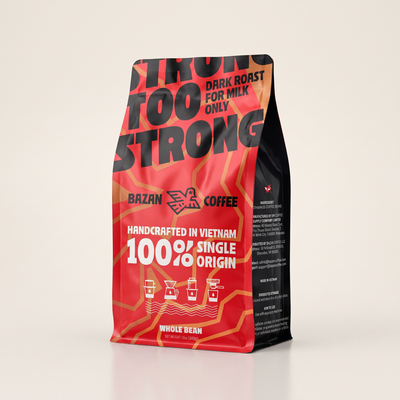
Too Strong is 100% Vietnamese Robusta from Đắk Lắk, dark roasted to stand up to milk and ice. It carries roughly twice the caffeine of a typical arabica blend (about 2.2–2.7%), with notes of chocolate, caramel and warm toast and none of the burnt, bitter bite.
- Made for milk: built for cà phê sữa đá, lattes and iced coffee.
- Brew it your way: phin filter, espresso machine, French press or paper filter.
- Fresh from the farm: roasted date printed on every bag.