Piccolo Coffee vs Cortado: The Ultimate Guide to Crafting Two Espresso Favorites Like a Pro
When it comes to small-format milk coffee drinks, two standouts quietly define the art of espresso precision: the piccolo coffee and the cortado. Both are minimalist, milk-based drinks served in small cups, beloved by baristas and espresso aficionados for their elegant balance of boldness and smoothness.
But if you're wondering what sets them apart-or how to master each one at home-you’ve come to the right place.
In this expert brewing guide by Bazan Coffee, we take a deep dive into the subtle but essential distinctions between piccolo coffee vs cortado, breaking down their origins, preparation techniques, ratios, and sensory experiences. Whether you’re a home barista or café operator, this article will empower you to make both drinks with intention, accuracy, and the best beans possible.
Let’s settle the piccolo vs cortado question once and for all.
What Is the Difference Between Piccolo Coffee and Cortado?
At first glance, these two drinks might seem identical-both are espresso-based and small in volume. But upon closer inspection, you’ll discover that their brewing ratios, milk texture, espresso base, and even cultural origin tell two distinct stories.
What Is a Piccolo Coffee?
The term piccolo means “small” in Italian. In coffee culture, particularly in Australia where the drink gained popularity, a piccolo latte is:
-
Espresso Base: Typically a single ristretto shot (15–20ml)
-
Milk Ratio: ~70–85ml of textured milk
-
Total Volume: ~90–100ml (~3 oz)
-
Cup: Served in a small demitasse or mini latte glass
-
Milk Texture: Smooth microfoam (like a latte, but shorter)
The piccolo was originally created for baristas to test milk–espresso ratios quickly during shift breaks-a “mini latte” with espresso punch.
The piccolo is best described as a latte on a ristretto base, offering sweetness and smoothness in a compact volume.

What Is a Cortado?
Cortado is a Spanish-origin espresso drink, with the word cortar meaning “to cut”-as in cutting espresso’s intensity with milk.
-
Espresso Base: Full double shot of espresso (36–40ml)
-
Milk Ratio: 1:1 with lightly steamed milk
-
Total Volume: ~120ml (~4 oz)
-
Cup: Often served in a 4 oz Gibraltar or demitasse glass
-
Milk Texture: No or minimal foam; smooth, steamed milk only
Piccolo Coffee vs Cortado: Side-by-Side Comparison
|
Feature |
Piccolo Coffee |
Cortado Coffee |
|
Origin |
Australia |
Spain |
|
Espresso Base |
Single ristretto (~15–20ml) |
Double espresso (~36–40ml) |
|
Milk Volume |
~70–85ml |
~35–40ml |
|
Total Drink Volume |
~90–100ml (3–3.5 oz) |
~120ml (4 oz) |
|
Milk Texture |
Microfoam (latte-style) |
Steamed milk (no foam) |
|
Flavor Profile |
Sweet, creamy, mellow |
Bold, balanced, espresso-forward |
|
Best Bean Type |
Medium roast with chocolate notes |
Medium-dark roast, lower acidity |
The Flavor Experience: What Makes Them Different?
Cortado: Clarity and Concentration
With a 1:1 ratio and no foam, cortado gives you direct access to the espresso’s character, softened by just enough milk to round out harshness. You’ll taste more roast origin, crema, and texture.
-
Great for: Lovers of bold espresso and minimalist milk
-
Mouthfeel: Creamy but not airy; low sweetness
-
Ideal Beans: Bazan’s Velvet Crema or Single Origin Guatemala
Piccolo: Subtlety and Sweetness
Using a ristretto shot-extracted shorter and sweeter-combined with velvety milk makes piccolo gentler and silkier, with a naturally sweeter profile.
-
Great for: Latte lovers wanting a smaller, quicker version
-
Mouthfeel: Light, creamy, subtly foamed
-
Ideal Beans: Bazan’s Signature Espresso Blend or Hazelnut Harmony
Shorter extractions like ristretto retain more soluble sweetness and minimize acidity, which is why piccolos taste smoother and less bitter than standard espresso drinks.

How to Brew a Piccolo and Cortado at Home
Tools You’ll Need:
-
Espresso machine or Moka pot (for base shots)
-
Milk pitcher + steam wand or milk frother
-
Digital scale and timer
-
3 oz piccolo glass and 4 oz cortado glass
How to Make a Piccolo Coffee (Home Version)
Ingredients:
-
18g espresso (yield 15–20ml ristretto)
-
~70–85ml whole milk (or barista oat milk)
Steps:
-
Brew a single ristretto (18g in, 15–20g out in ~15–20 seconds).
-
Steam milk to 135–145°F (57–63°C), creating microfoam with tight, glossy bubbles.
-
Pour the milk into the espresso, aiming for a latte-style integration.
-
Serve in a 3 oz glass or demitasse cup.
Barista Tip: Steam with a bit more aeration than cortado, but not as much as a cappuccino. Aim for “wet paint” microfoam.
How to Make a Cortado
Ingredients:
-
18–20g espresso (double shot)
-
~35–40ml whole milk (lightly steamed)
Steps:
-
Pull a double espresso (36–40ml yield in 25–30 seconds).
-
Steam milk gently to 130–140°F (55–60°C) with minimal aeration-no foam.
-
Pour the milk directly into the espresso, no swirling or layering required.
-
Serve in a 4 oz Gibraltar or short tumbler glass.
It is recommended to using preheated glassware to maintain temperature and crema integrity.
Real-World Brewing Tips
-
Choose high-quality espresso beans: Piccolo is more forgiving, cortado demands clarity. Bazan Coffee’s medium-dark roast will work best for both.
-
Don’t over-froth milk: Cortado should have almost no foam. Piccolo needs a thin, silky layer.
-
Taste before sweetening: Especially with piccolos, the natural lactose and ristretto sweetness often mean no sugar is needed.
FAQs: Piccolo Coffee vs Cortado
1. Which has more caffeine?
Cortado, as it uses a double shot, has more caffeine (~70–90mg) compared to a piccolo (~40–50mg from a ristretto shot).
2. Can I make these with oat milk?
Yes! Use barista-formulated oat milk for proper texture. Note: oat milk can enhance sweetness, especially in piccolos.
3. Are these good for latte art?
Piccolo is ideal for small-scale latte art due to microfoam. Cortado’s lack of foam makes it less suitable, but a practiced hand can still do simple tulips or hearts.
4. Which one is more traditional?
Cortado is more traditional in terms of cultural origin (Spain, Latin America). Piccolo is a modern café adaptation from Australia.
5. Can I use a Moka pot instead of espresso?
Yes, especially for cortado. While not true espresso, a well-brewed Moka base can provide enough depth for both drinks.

Piccolo Coffee vs Cortado-Which Should You Choose?
So, which is better: piccolo coffee vs cortado? It depends on what you value in your cup.
-
If you love clarity, strength, and boldness with minimal milk, choose the cortado.
-
If you prefer a gentler, creamier sip with subtle sweetness, the piccolo is your best friend.
But why choose one when you can master both at home?
With the right coffee, the right equipment, and this guide, you're only minutes away from brewing small-format espresso drinks that rival your favorite café.
Ready to Brew Like a Pro?
Whether you need bold crema for your cortado or mellow depth for your piccolo, our specialty espresso roasts are crafted to perform beautifully in every cup.
Brew better. Brew smarter. Brew with Bazan.
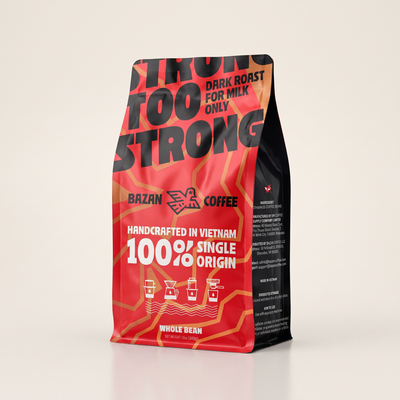
Brew It with Too Strong: Vietnam’s Bold Robusta
Too Strong is 100% Vietnamese Robusta from Đắk Lắk, dark roasted to stand up to milk and ice. It carries roughly twice the caffeine of a typical arabica blend (about 2.2–2.7%), with notes of chocolate, caramel and warm toast and none of the burnt, bitter bite.
- Made for milk: built for cà phê sữa đá, lattes and iced coffee.
- Brew it your way: phin filter, espresso machine, French press or paper filter.
- Fresh from the farm: roasted date printed on every bag.