Macchiato or Latte? A Complete Guide to Their Differences and How to Brew Them
If you love espresso-based drinks but struggle to choose between a macchiato and a latte, you're not alone. While both drinks contain espresso and milk, their preparation, taste, and texture are distinctly different. Understanding these differences will help you pick the perfect cup based on your personal preferences.
This guide will explore:
-
Macchiato vs Latte: What’s the Difference?
-
How to Make a Macchiato & Latte at Home
-
Which One is Stronger and Healthier?
-
Frequently Asked Questions (FAQ)
Macchiato vs. Latte: What’s the Difference?
Macchiato and latte are both espresso-based drinks, but they differ significantly in milk content, texture, strength, and flavor profile. While a macchiato emphasizes the boldness of espresso with just a touch of milk, a latte is a smoother, creamier drink with a higher milk-to-coffee ratio.
1. The Basics
Feature Comparison: Macchiato vs. Latte
|
Feature |
Macchiato |
Latte |
|
Espresso Ratio |
Mostly espresso with a dash of milk |
1/3 espresso |
|
Milk Ratio |
Small amount of foamed milk |
2/3 steamed milk |
|
Foam Ratio |
Thick, airy milk foam |
Light layer of milk foam |
|
Texture |
Bold, intense espresso flavor |
Creamy and smooth |
|
Flavor Profile |
Strong, rich coffee with a slight creaminess |
Mellow, slightly sweet, and milky |
|
Serving Size |
60-90ml (2-3 oz) |
240-300ml (8-10 oz) |

2. Understanding the Differences
Macchiato: A Bold Espresso with a Hint of Milk
The word "macchiato" means "stained" or "marked" in Italian, which perfectly describes how the drink is made. A traditional macchiato consists of a shot of espresso with just a small amount of foamed milk added on top. This milk "stains" the espresso, softening its intensity slightly without diluting the coffee’s strong taste.

Best for: Coffee lovers who enjoy a strong espresso flavor with just a touch of creaminess.
Common Variations:
-
Espresso Macchiato: The classic version with a shot of espresso "marked" by a small amount of foamed milk.
-
Latte Macchiato: The reverse version, where steamed milk is poured first and "marked" with espresso, creating a layered effect.
Pro Tip: If you enjoy strong, bold coffee with minimal milk, a macchiato is the best choice!
Latte: A Smooth and Milky Coffee Experience
A latte (short for Caffè Latte, meaning "milk coffee" in Italian) is a much creamier and milder drink compared to a macchiato. It consists of a shot of espresso combined with a generous amount of steamed milk and topped with a thin layer of milk foam. The higher milk content reduces the coffee’s bitterness, creating a smooth and well-balanced taste.

Best for: Those who prefer a milder, creamier coffee with a subtle espresso flavor.
Common Variations:
-
Flavored Lattes: Popular versions include vanilla latte, caramel latte, and hazelnut latte - each made by adding flavored syrups.
-
Iced Latte: Made by pouring espresso over cold milk and ice, without steaming.
-
Oat Milk or Almond Milk Latte: Perfect for those looking for dairy-free alternatives.
Pro Tip: If you enjoy a smoother, milkier coffee with more volume, a latte is the way to go!
3. Origin & Cultural Significance
Macchiato: A True Italian Classic
The macchiato originated in Italy as a way for baristas to distinguish a regular espresso from one with milk. Traditionally, Italians drink espresso throughout the day but prefer macchiatos in the afternoon when they want a coffee that’s slightly less intense than pure espresso.

Cultural Significance:
-
In Italy, a macchiato is considered an afternoon coffee - perfect for those who want a small energy boost without too much milk.
-
It remains a popular choice in European cafés for people who enjoy espresso but want just a hint of creaminess.
Latte: The Global Favorite
While the latte also originated in Italy, it became hugely popular in North America thanks to its smooth, approachable taste. The addition of flavored syrups (such as vanilla, caramel, or pumpkin spice) made the latte one of the most versatile and customizable coffee drinks worldwide.

Cultural Significance:
-
In Italy, a traditional Caffè Latte is usually only consumed in the morning, often with breakfast.
-
In the U.S. and other Western countries, lattes are enjoyed all day long and are commonly found in coffee chains like Starbucks.
-
The rise of latte art has made this drink even more popular, as baristas use the creamy microfoam to create beautiful designs.
Pro Tip: If you want to enjoy a warm, comforting coffee with endless customization options, a latte is the perfect choice!
4. Which One Should You Choose?
|
Preference |
Best Choice |
|
Stronger, more intense espresso flavor |
Macchiato |
|
Creamier, smoother, and more milk-forward taste |
Latte |
|
Smaller serving size, less milk |
Macchiato |
|
Larger serving size, more milk |
Latte |
|
Perfect for espresso lovers who want just a touch of milk |
Macchiato |
|
Great for those who prefer a milder coffee with a balanced taste |
Latte |
|
Best for making latte art |
Latte |
How to Make a Macchiato & Latte at Home
Macchiato Recipe
Ingredients:
-
1 shot of espresso
-
1-2 teaspoons of foamed milk
Steps:
-
Brew the espresso using a high-quality espresso machine.
-
Steam the milk until frothy, ensuring it remains thick and airy.
-
Spoon a small amount of milk foam onto the espresso.
-
Serve immediately for a rich, bold coffee experience.

Latte Recipe
Ingredients:
-
1 shot of espresso
-
180ml steamed milk
-
Light milk foam
Steps:
-
Brew espresso and pour into a large cup.
-
Steam the milk to create a velvety texture.
-
Pour steamed milk slowly over espresso, creating a creamy blend.
-
Add a thin layer of foam on top.
-
Optional: Create latte art using a milk frother.

Which One is Stronger?
-
Macchiato has a stronger espresso taste since it contains less milk, allowing the espresso to shine.
-
Latte is smoother and milder, as the additional milk dilutes the espresso flavor.
Which One is Healthier?
|
Factor |
Macchiato |
Latte |
|
Calories |
~15-30 (without sugar) |
~120 (without sugar) |
|
Caffeine |
~63mg (single shot) |
~63mg (single shot) |
|
Milk Content |
Minimal |
More milk, higher calories |
If you're looking for a lower-calorie, high-intensity espresso experience, macchiato is the better choice.
Frequently Asked Questions (FAQ)
Q: Which is better for a strong espresso kick?
A: Macchiato is the best choice if you want a bold, concentrated coffee flavor with minimal milk dilution.
Q: Can I make these drinks without an espresso machine?
A: Yes! You can use a Moka pot or AeroPress to brew strong coffee that mimics espresso. For frothing milk, you can use a manual whisk, a handheld milk frother, or a French press.
Q: Can I use plant-based milk?
A: Absolutely! The best options depend on the drink:
-
Oat milk is ideal for lattes because it creates a smooth, creamy texture similar to dairy milk.
-
Almond milk pairs well with macchiatos because of its light, nutty flavor that complements espresso without overpowering it.
Q: Which drink has more caffeine?
A: Both macchiato and latte contain the same amount of caffeine when made with a single espresso shot (~63mg caffeine). However, if you add extra espresso shots, the caffeine content increases accordingly.
Pro Tip: If you need an extra caffeine boost, you can order a double shot (Doppio) macchiato or latte for double the caffeine!
Elevate Your Macchiato & Latte Experience with Bazan Coffee
At Bazan Coffee, we believe that every macchiato and latte should start with the finest coffee beans. The balance between bold espresso and creamy milk depends on the quality of the coffee, and selecting high-grade, specialty beans ensures the best flavors in every cup.
Unlike mass-produced coffee, Bazan Coffee carefully selects, processes, and roasts each batch to highlight its unique characteristics. Whether you prefer a bold and intense macchiato, a smooth and creamy latte, or a balanced coffee experience, our Vietnamese Fine Robusta and high-altitude Arabica will help you craft the perfect espresso-based drink.
Brew It with Too Strong: Vietnam’s Bold Robusta
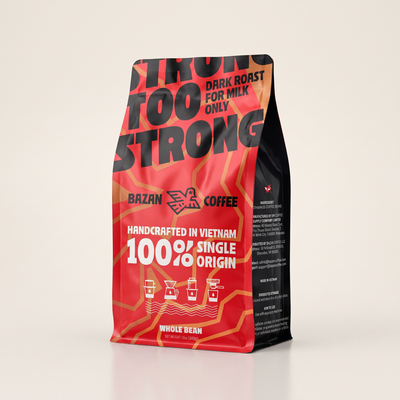
Too Strong is 100% Vietnamese Robusta from Đắk Lắk, dark roasted to stand up to milk and ice. It carries roughly twice the caffeine of a typical arabica blend (about 2.2–2.7%), with notes of chocolate, caramel and warm toast and none of the burnt, bitter bite.
- Made for milk: built for cà phê sữa đá, lattes and iced coffee.
- Brew it your way: phin filter, espresso machine, French press or paper filter.
- Fresh from the farm: roasted date printed on every bag.