Cortado Coffee vs Latte: A Barista's Guide to Choosing (and Brewing) the Right Coffee for You
When you walk into a specialty café and spot both “cortado” and “latte” on the menu, which do you choose?
The truth is, cortado coffee vs latte isn’t just a size difference. These drinks reflect two very different philosophies: one favors balance and precision, the other comfort and indulgence. Whether you're a home barista or just trying to understand the menu better, this guide from Bazan Coffee will walk you through everything you need to know-from the science of milk texture to cultural origin, caffeine impact, flavor profiles, and expert brewing tips.
Let’s break down the key differences-and help you make your next cup with complete confidence.
What Is the Difference Between a Cortado and a Latte?
At first glance, both drinks involve espresso and milk. But the similarity stops there.
Cortado Coffee
-
Ratio: 1:1 (espresso to milk)
-
Volume: 4 oz
-
Texture: Warm milk, little to no foam
-
Strength: Espresso-forward and balanced
-
Best For: Flavor clarity lovers and quick drinkers
Latte
-
Ratio: 1:3 to 1:5 (espresso to milk)
-
Volume: 8–12 oz
-
Texture: Silky milk with light foam
-
Strength: Milder, creamier profile
-
Best For: Casual drinkers and milk-based coffee fans
Cortado Coffee vs Latte: Quick Comparison Table
|
Feature |
Cortado Coffee |
Latte |
|
Espresso to Milk Ratio |
1:1 |
1:3 to 1:5 |
|
Volume |
4 oz |
8–12 oz |
|
Milk Texture |
Lightly steamed, no foam |
Steamed with microfoam |
|
Flavor Profile |
Strong, balanced |
Smooth, milky |
|
Drinking Experience |
Quick, bold |
Long, comforting |
|
Calories (Whole Milk) |
~40–60 kcal |
~120–200 kcal |
|
Ideal Roast Pairing |
Medium/Dark Single Origin |
Smooth, chocolatey blends |
Flavor and Mouthfeel: What to Expect from Each
Cortado: Pure Espresso Expression
Cortado preserves the nuances of espresso while softening the harshness. It’s ideal if you want to experience origin characteristics-chocolate, caramel, nut, even floral notes-without overwhelming bitterness.
Cortado’s short volume and low foam preserve espresso crema and deliver a direct, creamy mouthfeel with minimal aeration.
Latte: Comfort in a Cup
The latte, by contrast, stretches espresso with more milk and foam, mellowing out acidity and bitterness. Lattes work best with blends or crowd-pleasing flavor profiles. The texture is smoother and silkier, thanks to longer steaming and finer microfoam.
Cultural Origins: A Tale of Two Traditions
-
Cortado originated in Spain’s Basque region, typically served in 4 oz Gibraltar glasses, and quickly spread to Latin America. It is now popular in third-wave cafés for espresso purists.
-
Latte, or caffè latte, is Italian in origin, traditionally consumed at breakfast. It was adapted for the American café scene with larger cups and more milk.
How to Make a Cortado or Latte at Home
Whether you have a full espresso setup or just a Moka pot and a frother, both drinks can be crafted at home with care.
How to Make Cortado Coffee
Ingredients:
-
18g espresso (yield 36g)
-
60ml whole milk
Steps:
-
Brew a double shot of espresso using freshly ground beans like Bazan Coffee’s Velvet Crema.
-
Steam milk to 130–140°F (55–60°C) - no foam.
-
Pour gently into espresso in a 4 oz glass, allowing light integration of crema and milk.
Pro Tip: Avoid swirling the milk after steaming; the cortado needs precision, not aeration.

How to Make a Latte
Ingredients:
-
18g espresso (yield 36g)
-
150–200ml whole milk
Steps:
-
Brew your espresso shot into an 8 oz ceramic mug.
-
Steam milk to 140–150°F (60–65°C) with fine microfoam.
-
Pour steadily into the espresso, using a higher start then dropping lower for latte art if desired.
Pro Tip: Use Bazan’s Classic Espresso Blend-its chocolatey notes shine through the milk and enhance latte smoothness.
Which Is Better for You?
Choose Cortado If You:
-
Prefer bold, direct coffee flavor
-
Enjoy smaller, more intense drinks
-
Want to experience espresso without bitterness
Choose Latte If You:
-
Prefer a milder, milk-forward profile
-
Need a longer drink for sipping
-
Enjoy latte art, syrups, or flavor customization
Both drinks can express bean quality, but cortados are better for showcasing terroir and roast profile, while lattes work for versatility and comfort.
FAQs: Cortado Coffee vs Latte
Is a cortado stronger than a latte?
Yes-in flavor intensity, not caffeine. Both use similar espresso bases, but the cortado has less milk, making it more concentrated.
Does cortado have foam?
No. Unlike a cappuccino or latte, cortado is steamed without aeration. It’s smooth, not frothy.
Can I make cortado or latte with non-dairy milk?
Absolutely. Use barista-grade oat, macadamia, or soy milk for texture stability. Avoid watery alternatives that won’t steam well.
What is the healthiest option?
Cortado has fewer calories and less milk, so it’s lighter. But it depends on your milk and portion preferences.
Cortado Coffee vs Latte-Which Will You Brew?
The battle of cortado coffee vs latte isn’t about one being better-it’s about what you need in the moment.
-
Want bold, quick clarity with a touch of cream? Go cortado.
-
Need a warm, silky hug in a cup? Latte all the way.
At Bazan Coffee, we craft espresso roasts with both in mind. Whether you're chasing crema clarity or smooth milk pairing, our beans are roasted for balance, body, and consistency-so your cortado or latte always delivers.
Ready to Brew Your Best Cup Yet?
👉 Shop Bazan Coffee’s Espresso Roasts Now
Curated for flavor clarity. Roasted for milk-based perfection. Trusted by baristas. Loved at home.
Brew It with Too Strong: Vietnam’s Bold Robusta
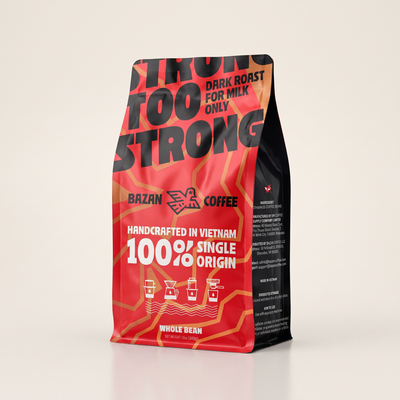
Too Strong is 100% Vietnamese Robusta from Đắk Lắk, dark roasted to stand up to milk and ice. It carries roughly twice the caffeine of a typical arabica blend (about 2.2–2.7%), with notes of chocolate, caramel and warm toast and none of the burnt, bitter bite.
- Made for milk: built for cà phê sữa đá, lattes and iced coffee.
- Brew it your way: phin filter, espresso machine, French press or paper filter.
- Fresh from the farm: roasted date printed on every bag.