Cortado Coffee vs Flat White: Which Milk-Based Espresso Should You Brew Today?
In a coffee world crowded with options, two drinks have quietly built loyal followings among coffee enthusiasts and baristas alike: cortado coffee and the flat white.
Both drinks blend espresso with steamed milk, but they deliver vastly different flavor experiences, textures, and cultural roots. Understanding the subtle-and not-so-subtle-differences between the two is essential if you want to refine your coffee knowledge or elevate your home brewing skills.
This expert guide from Bazan Coffee will walk you through the cortado coffee vs flat white debate with clarity, barista-backed technique, and real insights from trusted sources.
Let’s dive into how each drink is made, what sets them apart, and which one is right for your taste preferences and brewing setup.
What Is the Key Difference Between Cortado Coffee and Flat White?
At their core, both cortado and flat white combine espresso and steamed milk, but they differ in volume, texture, and ratio-all of which significantly impact the drinking experience.
Cortado Coffee
-
Origin: Spain
-
Ratio: 1:1 espresso to steamed milk
-
Texture: Warm milk, minimal to no foam
-
Volume: 4 oz (120 ml)
-
Taste: Bold and espresso-forward

Flat White
-
Origin: Australia/New Zealand
-
Ratio: 1:2 espresso to steamed milk
-
Texture: Velvety microfoam, thin layer on top
-
Volume: 5–6 oz (150–180 ml)
-
Taste: Smooth, creamy, slightly mellowed espresso
Cortado Coffee vs Flat White: Quick Comparison Table
|
Feature |
Cortado Coffee |
Flat White |
|
Origin |
Spain |
Australia/New Zealand |
|
Espresso to Milk Ratio |
1:1 |
1:2 |
|
Volume |
4 oz (120 ml) |
5–6 oz (150–180 ml) |
|
Milk Texture |
Lightly steamed, no foam |
Velvety, fine microfoam |
|
Flavor Profile |
Bold, concentrated |
Creamy, mellow |
|
Ideal Roast |
Medium to dark single origin |
Balanced, chocolatey blends |
|
Caloric Content (Whole Milk) |
~60 kcal |
~90–120 kcal |
The Sensory Experience: Taste and Texture Differences
Cortado: Strength and Clarity
A cortado maintains the integrity of the espresso shot, slightly softened by milk. It has no foam, allowing the crema and warm milk to blend into a consistent texture.
-
Best for: Those who want to taste origin character in espresso
-
Mouthfeel: Clean, direct, creamy
-
Brewing Note: Steaming is minimal; milk is warmed, not textured
Flat White: Smooth and Silky
The flat white features silky microfoam that integrates smoothly into the espresso. This foam isn’t dry like a cappuccino, but wet and velvety-what baristas call “paint-like.”
-
Best for: Those who like a creamy, layered espresso
-
Mouthfeel: Soft, smooth, slightly airy
-
Brewing Note: Requires expert steaming to achieve correct microfoam density
How to Make a Cortado and a Flat White (Step-by-Step)
How to Brew the Perfect Cortado Coffee
Ingredients:
-
18–20g freshly ground espresso beans
-
60 ml whole milk
Tools:
-
Espresso machine or Moka pot
-
Steam wand or milk frother
-
Gibraltar glass (4 oz)
Steps:
-
Pull a double shot of espresso (~36–40g yield).
-
Steam 60ml milk to 130–140°F (55–60°C), without frothing or introducing air.
-
Pour milk gently into espresso, blending with the crema.
Pro Tip: Use Bazan Coffee’s Velvet Crema or Single Origin Medium Roast for rich flavor clarity.
How to Make a Flat White
Ingredients:
-
18–20g espresso
-
100–120 ml whole milk
Tools:
-
Espresso machine
-
Steam wand
-
5–6 oz ceramic cup
Steps:
-
Pull a double shot of espresso.
-
Steam milk to 140–150°F (60–65°C), with 5–7 seconds of aeration for microfoam.
-
Swirl the milk in the pitcher to integrate texture.
-
Pour with precision to blend milk and crema, optionally adding latte art.
Pro Tip: Choose Bazan Coffee’s Classic Espresso Blend-its chocolate and nut notes shine through in milk.

What the Experts Say
Cortados require less technical milk work but more attention to espresso quality, while flat whites demand perfect microfoam to avoid becoming a latte.
Shorter milk drinks like cortado highlight roast defects or origin character, whereas flat whites provide a sensory buffer, smoothing out rough edges.
When to Choose Cortado vs Flat White
Choose Cortado If You:
-
Want a short, strong, espresso-forward drink
-
Prefer minimal milk and no foam
-
Appreciate origin clarity in espresso
-
Are in the mood for a quick coffee break
Choose Flat White If You:
-
Enjoy a creamy, longer sipping experience
-
Like microfoam and smooth texture
-
Want a balance between strength and comfort
-
Need a more filling or milk-based coffee
FAQs: Cortado Coffee vs Flat White
1. Which is stronger: cortado or flat white?
Cortado tastes stronger due to a higher espresso-to-milk ratio. However, both usually have the same caffeine content.
2. Can I make a cortado or flat white with non-dairy milk?
Yes! Use barista-grade oat or macadamia milk for best texture. Be aware that plant-based milks steam differently and may affect foam quality.
3. Is a cortado healthier than a flat white?
Generally, yes. Cortados use less milk and fewer calories, especially with whole milk.
4. Can I make both drinks with a Moka pot instead of espresso?
Absolutely. While not a true espresso, a Moka pot brewed with fine espresso grind can yield a concentrated base suitable for both drinks.
5. Why do baristas use different cups for each?
Cortado is traditionally served in a 4 oz Gibraltar glass to emphasize clarity and crema. Flat whites are served in ceramic cups to retain heat and improve mouthfeel over a longer period.
Cortado Coffee vs Flat White - Choose Your Moment
Choosing between cortado coffee vs flat white is less about rules and more about intent. Do you want intensity or comfort? Strength or smoothness?
-
Go cortado when you want to taste the espresso’s soul.
-
Choose flat white when you need a soft, balanced hug in a cup.
At Bazan Coffee, we roast espresso that performs beautifully in both drinks. Whether you’re extracting sharp origin notes or crafting silky flat whites, our beans are optimized for crema, body, and milk pairing.
Discover Your Espresso Ritual
👉 Explore Bazan Coffee’s Espresso Roast Collection
Crafted for milk drinks. Roasted with clarity. Trusted by baristas and home brewers alike.
Brew boldly. Brew better-with Bazan.
Brew It with Too Strong: Vietnam’s Bold Robusta
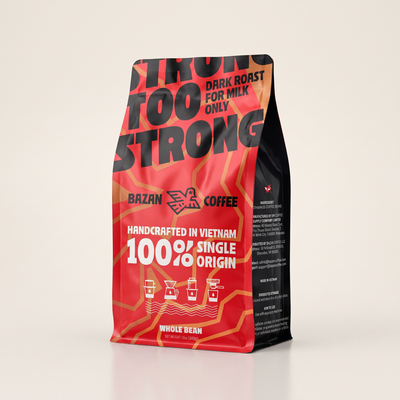
Too Strong is 100% Vietnamese Robusta from Đắk Lắk, dark roasted to stand up to milk and ice. It carries roughly twice the caffeine of a typical arabica blend (about 2.2–2.7%), with notes of chocolate, caramel and warm toast and none of the burnt, bitter bite.
- Made for milk: built for cà phê sữa đá, lattes and iced coffee.
- Brew it your way: phin filter, espresso machine, French press or paper filter.
- Fresh from the farm: roasted date printed on every bag.